Mushroom Icon: Forest Wild Fungus Color Graphics & Illustrations
First Impression: Earthy, Whimsical, and Instantly Recognizable
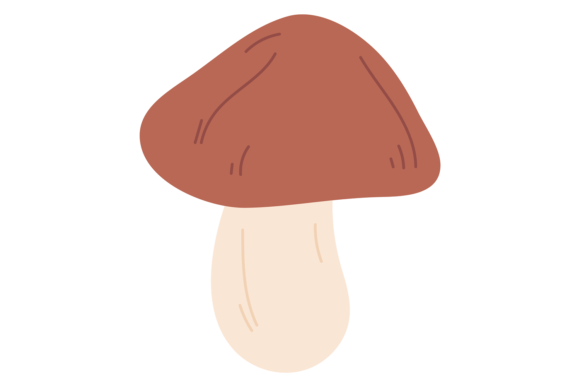
When I opened Mushroom Icon. Forest Wild Fungus Color for a client project — a seasonal line of organic mushroom-infused teas for a small-batch herbal apothecary — my first thought wasn’t “cute” or “trendy.” It was “authentic.” The icon carries quiet confidence: a softly rounded cap with subtle gill detail, gentle curvature in the stem, and that unmistakable forest palette — mossy olive, warm ochre, muted taupe, and a whisper of dusky rose. It’s not cartoonish, not overly stylized, and definitely not generic clipart. This is a graphic design asset built for real creative work: grounded, intentional, and emotionally resonant.
Fits Like a Hand-Drawn Element — But With Vector Precision
The Mushroom Icon. Forest Wild Fungus Color lands somewhere between botanical illustration and modern design sensibility. It reads as hand-crafted at a glance (ideal for handmade business branding), yet holds up flawlessly in SVG and EPS — meaning I scaled it from a 12pt label detail to a 36-inch banner without pixelation or distortion. For the tea brand, that meant using the same icon across product mockups, Instagram carousel posts, Canva templates for email headers, and even sublimation designs for reusable cotton tote bags. Its visual weight and texture support storytelling without competing — a rare balance in today’s oversaturated illustration market.
Where It Shines in Real Client Work
- Packaging design: Printed cleanly on kraft paper labels and matte-finish tins — the earthy tones harmonize with natural substrates, and the transparent PNG lets me layer it over watercolor backgrounds.
- Social media graphics: Works beautifully in Pinterest pins and Instagram Stories — especially when paired with serif fonts for editorial warmth or clean sans serifs for modern contrast.
- Printable design & Cricut projects: The SVG file imports cleanly into Design Space; I used it for custom vinyl stickers and laser-cut wood ornaments — no jagged edges, no alignment hiccups.
- Brand identity systems: Served as a secondary mark alongside the logotype — reinforcing theme without replacing function. Not a logo replacement, but a trusted supporting element.
- Etsy product visuals: Enhanced listing thumbnails and banner images for a mushroom-themed digital product bundle — instantly communicating category and mood.
Where to Use It Thoughtfully
This isn’t a one-size-fits-all SVG design. Its charm lies in its character — which means it demands context. Avoid dropping Mushroom Icon. Forest Wild Fungus Color into minimalist corporate reports, ultra-sleek tech branding, or dense infographics where clarity trumps atmosphere. It loses impact below 18px in UI contexts, and on busy photo backgrounds, the delicate tonal range can blur. In low-contrast settings (e.g., light gray on off-white), test print quality early — some screen previews flatter subtlety more than physical ink does.
Design Judgment: Mood, Trust, and Audience Alignment
For wellness brands, nature journals, forest school curricula, or local foraging events, this icon builds instant visual trust. It signals care, authenticity, and tactile connection — qualities customers actively seek from small business branding. Emotionally, it leans into gentle curiosity rather than clinical precision, making it ideal for educational content, blog visuals, or editorial design around sustainability and slow living. That said, it won’t convey authority in finance or legal marketing — its strength is warmth, not rigor.
Practical Designer Notes Before You Commit
- Test the transparent PNG on both light and dark website backgrounds — verify edge fidelity and anti-aliasing.
- Convert to grayscale and check readability — some forest tones flatten into near-identical values.
- Preview at 25%, 100%, and 300% scale — confirm stem detail remains legible in product mockups.
- Place it beside your primary typefaces: it pairs best with warm serifs (like Cormorant Garamond), friendly sans serifs (Poppins, Montserrat), and soft script fonts — avoid sharp display or monospaced fonts unless intentionally contrasting.
- Inspect the SVG paths — clean nodes mean easy recoloring in Illustrator or Figma; tangled vectors will slow down production.
- Confirm commercial license covers your use case — especially for print-on-demand, sublimation design, or digital resale items like Canva templates.
A Strategic Asset — Not Just Decorative Clipart
Mushroom Icon. Forest Wild Fungus Color succeeds because it operates on multiple levels: it’s a functional graphic design asset, a mood-setting illustration, and a subtle brand amplifier. In the tea project, it became part of the story — not just decoration. When placed beside hand-lettered copy and dried-mushroom photography, it completed a cohesive visual language. That’s the mark of a strong creative design: it doesn’t shout, but it lingers. Whether you’re building an Etsy product, designing packaging for a local maker, or crafting social media graphics for a seasonal campaign, this icon earns its place — if your project values authenticity over austerity, warmth over sterility, and craft over convenience.