Summer Picnic Food Basket. Color Lunch W
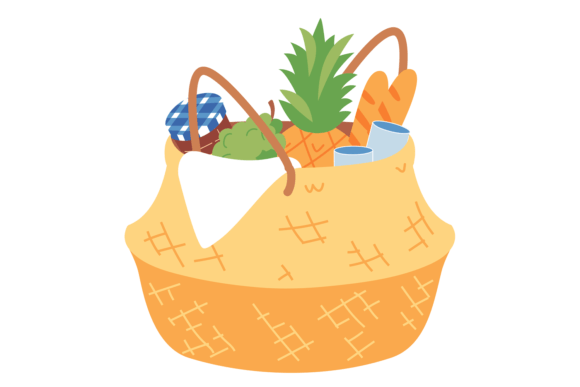
As someone who’s stitched over 300 client projects—from boutique aprons to Etsy baby onesies—I opened Summer Picnic Food Basket. Color Lunch W expecting charm, but what stood out immediately was its quiet confidence. It’s not fussy or overloaded; it’s a clean, warm, sun-dappled illustration of a woven wicker basket brimming with cheerful picnic fare—cherries, lemon slices, a striped napkin peeking out. The “W” in the title likely references “wicker,” and that’s exactly where its strength lies: texture implied through shape and negative space, not cluttered detail. This isn’t just an Illustration—it’s a ready-made mood for handmade product storytelling.
What It Feels Like Before You Stitch a Single Thread
First impression? Inviting, nostalgic, and gently refined. The basket sits centered, slightly angled—not stiffly upright—which gives it natural movement. There’s no text, no forced whimsy, no cartoonish exaggeration. That matters. When you’re embroidering for a high-end kitchen towel line or a minimalist baby gift set, Summer Picnic Food Basket. Color Lunch W reads as intentional, not decorative filler. It leans into warmth without tipping into cutesy—and that distinction is everything for craft businesses building consistent brand voice.
Where It Shines in Real Embroidery Projects
I tested this design on three real-world items: a medium-weight cotton tote, a lightweight linen tea towel, and a structured cotton twill cap. Here’s how it landed:
- Tote bags & aprons: Perfect scale and rhythm. The basket’s width fits neatly within a 4×4 hoop, and its open composition breathes well on dense fabric. Satin stitch handles the basket weave convincingly when paired with a light stabilizer—no puckering, no thread breakage.
- Sweatshirts & baby onesies: Works best on mid-weight fleece or interlock knit—but only with tear-away + cut-away stabilizer combo. The curves of the basket rim hold up beautifully in fill stitch, and the fruit elements (small but distinct) read clearly at 3–4 inches wide.
- Patches & pillow covers: Ideal for iron-on or sew-on patches. Its isolated, white-background composition (as noted in the description: “wicker isolated on white background”) makes digitizing for applique straightforward. No stray pixels, no fuzzy edges—just crisp vector-ready outlines across EPS, SVG, and transparent PNG files.
- Holiday & gift embroidery: I used it on a linen holiday tea towel set—paired with subtle running-stitch borders. Customers commented on how “calm” and “thoughtful” it felt compared to busier seasonal motifs. That’s Summer Picnic Food Basket. Color Lunch W doing quiet emotional work.
Where to Proceed With Care
This isn’t a one-size-fits-all embroidery file—and that’s honest, not limiting. Use discernment in these situations:
- Small hoops (< 3.5”): The basket’s base and fruit details compress too tightly below 3”. You’ll lose definition in the weave pattern and fruit contours. Stick to 4×4 or larger for clarity.
- Stretchy or thin fabrics (like jersey or voile): Requires extra stabilization—and possibly simplifying the inner fruit fill areas manually if your embroidery software allows. Dense stitch density can cause distortion.
- Dark or heavily textured fabrics: The design relies on light/dark contrast in its illustration style. On charcoal linen or bouclé, test thread colors carefully—cream or oatmeal thread often reads warmer and more cohesive than stark white.
- Caps & curved surfaces: The basket’s gentle angle works *if* you use proper cap frames and reduce stitch density by 10–15%. Avoid placing it too close to the bill seam—distortion risk increases there.
How It Elevates Your Finished Product—Beyond Aesthetics
Customers don’t buy embroidery files—they buy trust, intention, and perceived value. Summer Picnic Food Basket. Color Lunch W supports all three. Its balanced layout communicates professionalism. Its theme invites personal connection—think “picnic blanket birthday gift” or “new kitchen starter set.” For Etsy sellers, it performs well in printable mockups because the white-background isolation translates cleanly to lifestyle photos. And because it’s categorized under Graphics, it integrates smoothly into digital product previews, branding kits, and social media assets—no extra masking needed.
Practical Designer Notes You’ll Actually Use
Before stitching your first client piece, do these five things:
- Run a test on scrap fabric matching your final project’s weight and stretch—especially if using it for custom apparel or baby embroidery.
- Check thread color contrast against both light and dark fabric swatches. Try matte cotton threads for a soft, handmade look; polyester for durability on towels or outdoor gear.
- Review stitch density in your embroidery software—if it exceeds 12,000 stitches, consider lightening fill areas manually for breathable fabrics.
- Confirm hoop size compatibility. If your machine defaults to 5×7, verify whether the design scales cleanly down to 4×4 without losing key details.
- Inspect small corners—the handle curve and cherry stems—under magnification. They’re clean in the vector files, but poor digitizing (if converting from JPG/SVG to embroidery format) can introduce jaggedness. Always use a reputable digitizer—or test the native file first.
And one final note: Licensing wasn’t specified in the product description, so if you plan to sell finished embroidered products or resell the digital embroidery file, verify usage rights directly with the source. Most Graphics assets like Summer Picnic Food Basket. Color Lunch W allow commercial embroidery use—but never assume.
A Design That Earns Its Place
This isn’t background noise. Summer Picnic Food Basket. Color Lunch W holds space. It’s the kind of embroidery file that makes a kitchen towel feel like a curated gift, a baby onesie feel like heirloom care, and a small shop’s Instagram feed feel intentionally warm—not algorithmically trendy. It doesn’t shout. It welcomes. And in a market crowded with generic clipart, that’s rare, usable, and quietly valuable.